Ship and Marine Systems Engineer
Works on the analysis, design, and development of ships and marine systems that are efficient, safe, and sustainable.
The Naval Architecture & Marine Engineering Study Program curriculum at Universitas Indonesia is designed to develop graduates with strong foundations in science, ship design, marine transportation systems, and professional skills relevant to the modern maritime industry.

The Independent Professional Profile (PPM) is the core competency statement set by the Naval Architecture & Marine Engineering Study Program at Universitas Indonesia, describing the highest-level outcome expected of every graduate, formulated as follows:
A Bachelor of Engineering who is able to analyze and design ship structures, ship systems, and marine transportation systems while considering energy conservation aspects in contributing to the achievement of sustainable development goals.
Based on this graduate profile, PSTP UI graduates are expected to pursue diverse professional roles across the maritime sector, engineering services, public policy, and entrepreneurship.
The Independent Professional Profile translates into the following range of professional pathways:
Works on the analysis, design, and development of ships and marine systems that are efficient, safe, and sustainable.
Contributes to policy development, regulation, governance, and supervision in maritime-related institutions at national and regional levels.

Oversees quality and execution across ship planning, construction, and maintenance processes in shipyards and related industries.
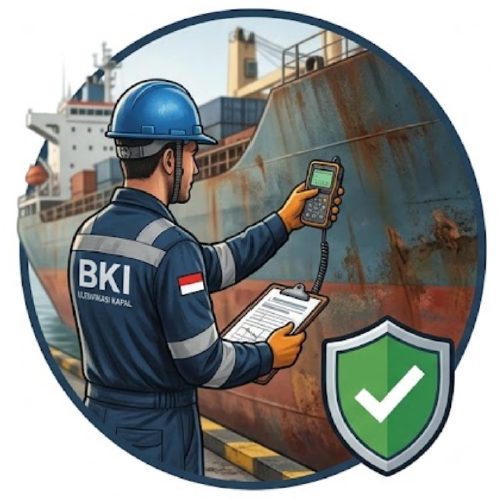
Conducts technical inspections, compliance verification, and safety assessments according to classification standards.

Strengthens maritime communities through education, training, and the development of civic-based initiatives.

Bridges technical solutions and industrial needs through service support, product consultation, and after-sales engineering.

Builds innovation-driven ventures in shipbuilding, maritime technology, engineering services, and supporting industries.

Performs technical valuation and risk analysis related to maritime assets, damages, claims, and financing feasibility.
The Graduate Learning Outcomes are structured to build academic, professional, and personal competencies progressively as the foundation for relevant and sustainable engineering practice.
Able to apply fundamental knowledge of mathematics, basic sciences, and information technology required to achieve competence in Naval Architecture & Marine Engineering.
Able to design ship structures, ship systems, and marine transportation systems with attention to energy conservation in order to meet expected needs within realistic constraints, while recognizing and or utilizing local and national resource potential with a global outlook.
Able to conduct experiments, gather information, analyze data, and report experimental results by applying statistical principles.
Able to think critically, creatively, and innovatively in identifying, formulating, analyzing, and solving naval architecture problems.
Able to apply modern engineering methods, skills, and tools needed in professional practice such as material and process selection, and computer-aided ship design.
Able to communicate effectively in visual, written, and verbal forms.
Able to design, plan, complete, and evaluate tasks within existing constraints.
Able to work effectively both individually and within multidisciplinary or multicultural teams.
Able to act responsibly and comply with engineering professional ethics while demonstrating innovation and independence in entrepreneurship.
Able to undertake lifelong learning, including access to relevant and current knowledge on emerging issues.
The curriculum structure is divided into the regular class and the international special class. Each track presents a study-load summary, semester-by-semester course distribution, and elective offerings in a format that is easier to review academically.
The regular track emphasizes scientific foundations, ship engineering, manufacturing, ship systems, and elective courses that provide flexibility for students to deepen their professional interests.
| Study Load | Credit Units | % |
|---|---|---|
| University Required Courses | 10 | 6.9% |
| Faculty Required Courses | 24 | 16.7% |
| Study Program Required Courses | 90 | 62.5% |
| Total Required Courses | 124 | 86.1% |
| Elective Courses | 20 | 13.9% |
| Total Study Load | 144 | 100.0% |
| Course | Credits |
|---|---|
| English | 2 |
| Calculus | 4 |
| Linear Algebra | 4 |
| Physics - Mechanics and Heat | 3 |
| Physics Laboratory - Mechanics and Heat | 1 |
| Introduction to Engineering Design | 2 |
| Engineering Drawing | 2 |
| Introduction to Ship Technology and Material | 2 |
| Course | Credits |
|---|---|
| Integrated Character Building | 6 |
| Advanced Calculus | 2 |
| Statistics and Probability | 2 |
| Physics - Electricity, Magnetism, Waves, and Optics | 3 |
| Physics Laboratory - Electricity, Magnetism, Waves, and Optics | 1 |
| Basic Chemistry | 2 |
| Ship Modelling and Visualization | 2 |
| Structural Statics | 2 |
| Course | Credits |
|---|---|
| Computational Thinking | 2 |
| Differential Mathematics | 3 |
| Discrete Mathematics | 2 |
| Physics - Kinematics, Dynamics, and Fluids | 4 |
| Basic Thermodynamics | 4 |
| Ship Building Theory | 2 |
| Ship Structure 1 | 2 |
| Basic Fluid Mechanics of Ships | 2 |
| Course | Credits |
|---|---|
| Fundamentals of Data Analytics | 2 |
| Ship Hydrodynamics | 2 |
| Numerical Methods | 2 |
| Ship Vibrations | 2 |
| Ship Heat Transfer | 2 |
| Ship Resistance and Propulsion | 4 |
| Ship Structure 2 | 2 |
| Ship Fluid and Piping Systems | 2 |
| Ship Machinery and Transmission Systems | 2 |
| Course | Credits |
|---|---|
| Ship Design Assignment 1 | 3 |
| Ship Manufacturing Process | 2 |
| Ship Power Generation | 2 |
| Ship Auxiliary Equipment | 2 |
| Welding Engineering | 2 |
| Sustainability, Occupational Health and Safety | 2 |
| Capita Selecta | 1 |
| Religion | 2 |
| Elective #1 | 4 |
| Course | Credits |
|---|---|
| Ship Design Assignment 2 | 4 |
| Ship Engine Room Design | 2 |
| Ship Electrical System | 2 |
| Ship Maintenance and Repair | 2 |
| Survey and Inspection of Ships and Marine Buildings | 2 |
| Ship Financing and Insurance | 2 |
| Practical Work 1 | 1 |
| Elective #2 | 4 |
| Course | Credits |
|---|---|
| Ship Design Assignment 3 | 4 |
| Practical Work 2 | 2 |
| Seminar | 1 |
| Comprehensive Examination | 1 |
| Elective #3 | 4 |
| Elective #4 | 4 |
| Course | Credits |
|---|---|
| Undergraduate Thesis | 4 |
| Elective #5 | 4 |
Elective courses are grouped into odd-semester and even-semester offerings so students can tailor their advanced study path according to their academic and professional interests.
| Course | Credits |
|---|---|
| Marine and Offshore Structure | 4 |
| Marine Transportation and Port Management | 4 |
| Maritime Law and Regulation | 4 |
| Supply Chain Technology | 4 |
| Cold Storage Technology | 4 |
| Ship Energy Efficiency | 4 |
| Maritime AI and IOT | 4 |
| Ship Fleet Planning | 4 |
| Advanced Engineering Mathematics** | 2 |
| Engineering Computation** | 2 |
| Academic Writing** | 2 |
| Advanced Fluid Dynamics and Heat Transfer** | 4 |
| Materials and Manufacturing Processes** | 4 |
| Internship A1 (Non-Engineering Aspects)* | 3 |
| Internship A2 (Non-Engineering Aspects)* | 2 |
| Special Topic 1* | 4 |
| Special Topic 2* | 4 |
| Course | Credits |
|---|---|
| Special Ship Project | 4 |
| Ship Production Optimization | 4 |
| Maritime Safety | 4 |
| Advanced Welding Engineering | 4 |
| Port Operation and Planning | 4 |
| Big Data in Marine Engineering | 4 |
| Marine Corrosion | 4 |
| Ship Planned Maintenance System | 4 |
| Air Conditioning and Refrigeration System of Ship | 4 |
| Energy Optimization System** | 4 |
| Experimental Design** | 2 |
| Data Analytics** | 2 |
| Artificial Intelligence** | 2 |
| Maritime Technology and Management** | 4 |
| Ocean Energy** | 4 |
| Internship B1 (Engineering Aspects)* | 3 |
| Internship B2 (Engineering Aspects)* | 2 |
| Special Topic 3* | 4 |
| Special Topic 4* | 4 |
The international track combines core Naval Architecture & Marine Engineering competencies with international exposure, including a significant overseas component within the total curriculum load.
| Study Load | Credit Units | % |
|---|---|---|
| University Required Courses | 4 | 2.8% |
| Faculty Required Courses | 22 | 15.3% |
| Study Program Required Courses | 55 | 38.2% |
| Elective Courses | 0 | 0.0% |
| Total Required Courses | 81 | 56.3% |
| Overseas | 63 | 43.8% |
| Total Study Load | 144 | 100.0% |
| Course | Credits |
|---|---|
| English | 2 |
| Calculus | 4 |
| Linear Algebra | 4 |
| Physics - Mechanics and Heat | 3 |
| Physics Laboratory - Mechanics and Heat | 1 |
| Introduction to Engineering Design | 2 |
| Engineering Drawing | 2 |
| Introduction to Ship Technology and Material | 2 |
| Course | Credits |
|---|---|
| Religion | 2 |
| Physics - Electricity, Magnetism, Waves, and Optics | 3 |
| Physics Laboratory - Electricity, Magnetism, Waves, and Optics | 1 |
| Advanced Calculus | 2 |
| Statistics and Probability | 2 |
| Basic Chemistry | 2 |
| Ship Modelling and Visualization | 2 |
| Structural Statics | 2 |
| Computational Thinking | 2 |
| Numerical Methods | 2 |
| Course | Credits |
|---|---|
| Differential Mathematics | 3 |
| Discrete Mathematics | 2 |
| Physics - Kinematics, Dynamics, and Fluids | 4 |
| Basic Thermodynamics | 4 |
| Ship Building Theory | 2 |
| Ship Structure 1 | 2 |
| Basic Fluid Mechanics of Ships | 2 |
| Fundamentals of Data Analytics | 2 |
| Course | Credits |
|---|---|
| Ship Hydrodynamics | 2 |
| Ship Vibrations | 2 |
| Heat Transfer | 2 |
| Ship Resistance and Propulsion | 4 |
| Ship Structure 2 | 2 |
| Ship Machinery and Transmission Systems | 2 |
| Ship Manufacturing Process | 2 |
| Ship Power Generation | 2 |
| Ship Electrical System | 2 |
| Course | Credits |
|---|---|
| Ship Fluid and Piping Systems | 2 |
| Sustainability, Occupational Health and Safety | 2 |
| Ship Design Assignment 1 | 3 |
| Ship Auxiliary Equipment | 2 |
| Welding Engineering | 2 |
| Capita Selecta | 1 |
| Ship Maintenance and Repair | 2 |
| Survey and Inspection of Ships and Marine Buildings | 2 |
| Elective 1 | 4 |
| Course | Credits |
|---|---|
| Integrated Character Building | 6 |
| Ship Design Assignment 2 | 4 |
| Ship Engine Room Design | 2 |
| Ship Financing and Insurance | 2 |
| Practical Work 1 | 1 |
| Elective 2 | 4 |
| Course | Credits |
|---|---|
| Ship Design Assignment 3 | 4 |
| Practical Work 2 | 2 |
| Seminar | 1 |
| Comprehensive Examination | 1 |
| Elective 3 | 4 |
| Elective 4 | 4 |
| Course | Credits |
|---|---|
| Undergraduate Thesis | 4 |
| Elective 5 | 4 |
The international special class elective pool is arranged by odd and even semesters to support more focused specialization planning.
| Course | Credits |
|---|---|
| Marine and Offshore Structure | 4 |
| Marine Transportation and Port Management | 4 |
| Maritime Law and Regulation | 4 |
| Supply Chain Technology | 4 |
| Cold Storage Technology | 4 |
| Ship Energy Efficiency | 4 |
| Maritime AI and IOT | 4 |
| Ship Fleet Planning | 4 |
| Advanced Engineering Mathematics | 2 |
| Engineering Computation | 2 |
| Academic Writing | 2 |
| Advanced Fluid Dynamics and Heat Transfer | 4 |
| Materials and Manufacturing Processes | 4 |
| Internship A1 (Non-Engineering Aspects) | 3 |
| Internship A2 (Non-Engineering Aspects) | 2 |
| Special Topic 1 | 4 |
| Special Topic 2 | 4 |
| Course | Credits |
|---|---|
| Special Ship Project | 4 |
| Ship Production Optimization | 4 |
| Maritime Safety | 4 |
| Advanced Welding Engineering | 4 |
| Port Operation and Planning | 4 |
| Big Data in Marine Engineering | 4 |
| Marine Corrosion | 4 |
| Ship Planned Maintenance System | 4 |
| Air Conditioning and Refrigeration System of Ship | 4 |
| Energy Optimization System | 4 |
| Experimental Design | 2 |
| Data Analytics | 2 |
| Artificial Intelligence | 2 |
| Maritime Technology and Management | 4 |
| Ocean Energy | 4 |
| Internship B1 (Engineering Aspects) | 3 |
| Internship B2 (Engineering Aspects) | 2 |
| Special Topic 3 | 4 |
| Special Topic 4 | 4 |