Research & Collaboration

Research Portfolio of Naval Architecture & Marine Engineering UI

A range of research projects and innovations developed by the Naval Architecture & Marine Engineering Study Program at UI, from electric boat prototypes and maritime energy systems to port operations optimization, as well as the research topics pursued by the study program's lecturers.

Flagship Research Projects

Electric Fishing Boat Project

Electric Fishing Boat Project

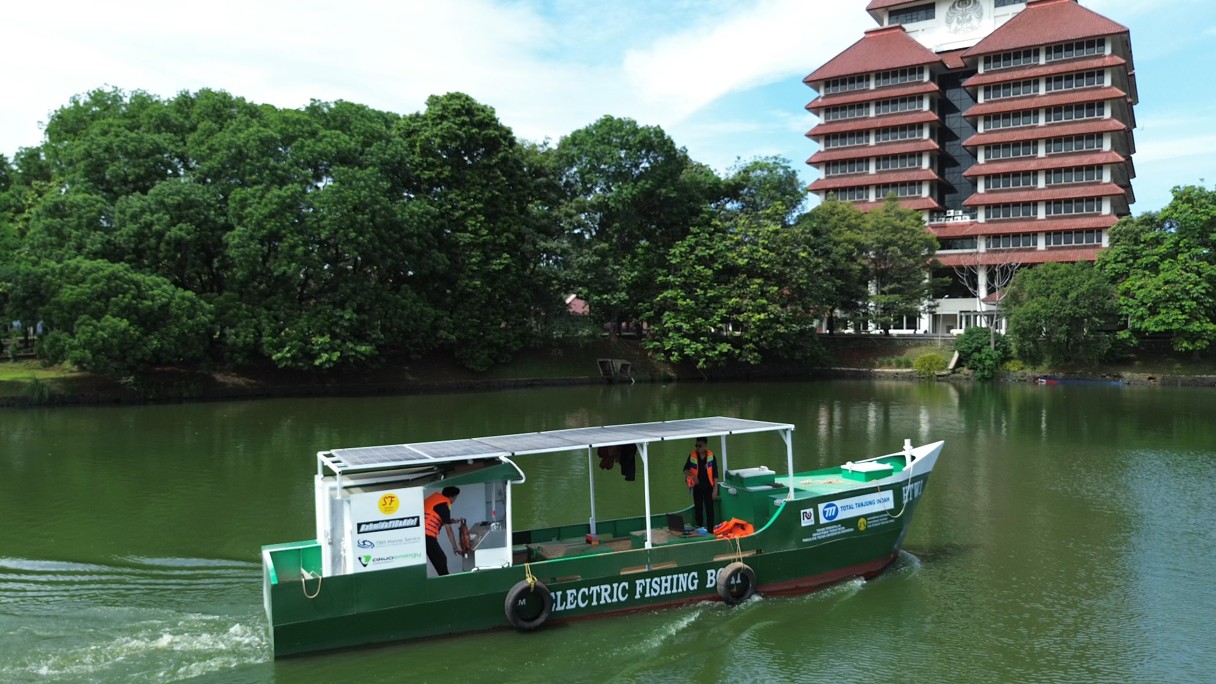
A solar-powered electric fishing boat prototype, trialed directly on the UI campus lake.

Electric Fishing Boat Project

Electric Fishing Boat Project

A solar-powered electric fishing boat prototype developed as a more environmentally friendly transportation solution for fishermen. The boat has been directly trialed on the UI campus lake, with a 19.2 kWh battery capacity and an operational endurance of 4-5 hours at 500 RPM. Testing covered the relationship between RPM and power/speed, as well as turning tests to evaluate the vessel's tactical diameter, advance, and transfer.

Fishing Monitoring (FVEO)

Fishing Monitoring (FVEO)

An onboard camera, sensor, and AI-based fishing activity monitoring system.
Fishing Monitoring (FVEO)

Fishing Monitoring (FVEO)

An onboard camera- and sensor-based fishing activity monitoring system that detects changes in the height of fish stacks in the hold using height sensors and camera snapshots whenever fish are added or removed. Data is processed on-board and sent via a communication modem to a cloud-based backend, accessible to fishermen or officers through a web API-based client application. The research draws on data analytics and statistics, using the Edge Impulse AI toolset.

Ocean Energy Conversion and Green Hydrogen System

Ocean Energy Conversion and Green Hydrogen System

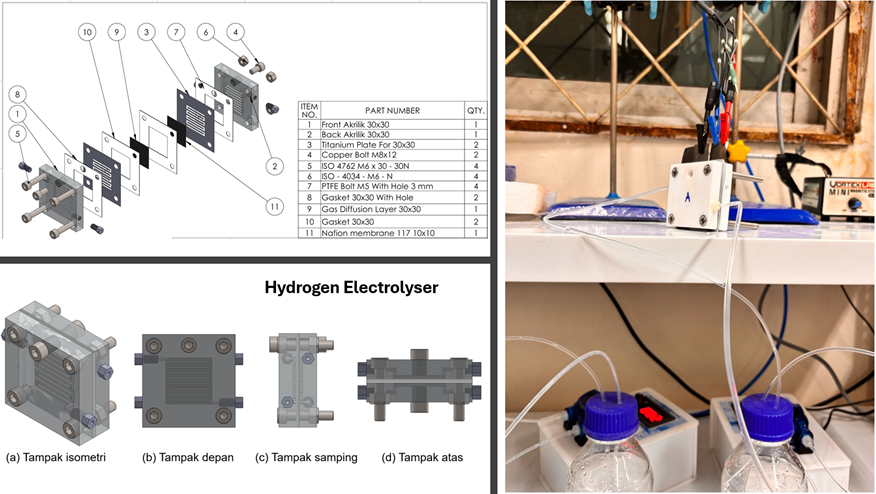
A hydrogen electrolyser and storage system as an alternative clean energy source for the maritime sector.
Ocean Energy Conversion and Green Hydrogen System

Ocean Energy Conversion and Green Hydrogen System

Development of a hydrogen electrolyser system along with hydrogen storage technology using a carbon-fiber-tow COPV (Composite Overwrapped Pressure Vessel) with a natural rubber liner, fabricated using a filament winding machine. This research is part of efforts to convert ocean energy into green hydrogen as an alternative clean energy source for the maritime sector.

Development of Wing in Ground (WIG) Craft

Development of Wing in Ground (WIG) Craft

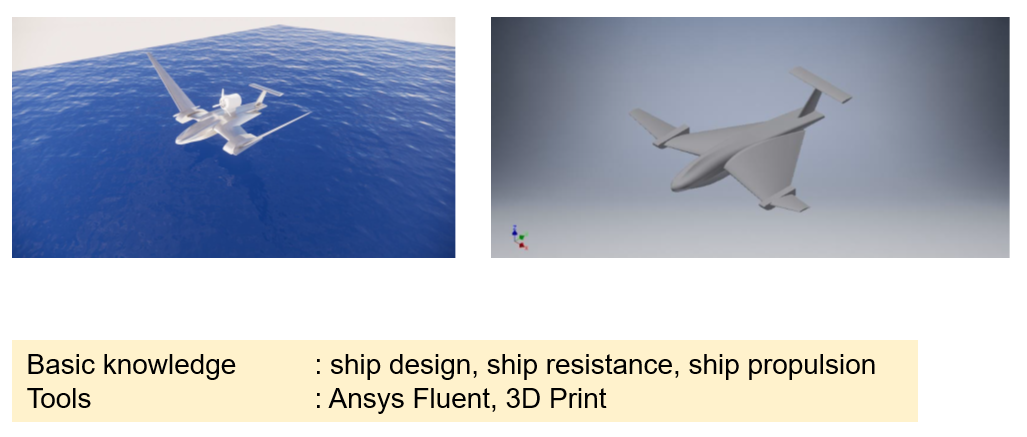
A craft that exploits the ground effect to travel efficiently over a water surface.
Development of Wing in Ground (WIG) Craft

Development of Wing in Ground (WIG) Craft

A study on the development of a Wing-in-Ground (WIG) craft, a vehicle that exploits the ground effect to travel over a water surface with high aerodynamic efficiency. The research draws on ship design, ship resistance, and ship propulsion knowledge, supported by computational fluid dynamics simulation (Ansys Fluent) and a 3D-printed prototype.

Green Port (Emission Assessment Model)

Green Port (Emission Assessment Model)

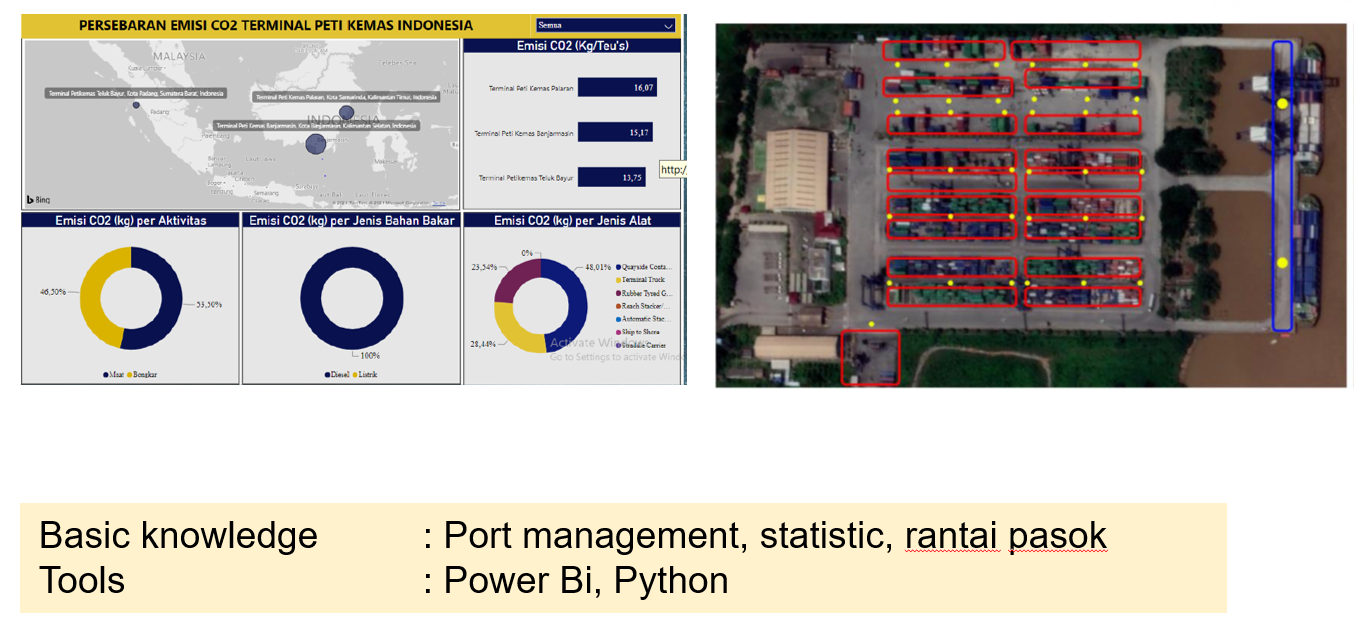
A CO2 emission assessment model for container terminal activities.

Green Port (Emission Assessment Model)

Green Port (Emission Assessment Model)

A carbon (CO2) emission assessment model for container terminal activities, covering emission distribution analysis by activity, fuel type, and equipment type (quayside cranes, terminal trucks, rubber-tyred gantries, reach stackers, and others). The research draws on port management and statistics, using Power BI and Python for data visualization and analysis.

Port Performance Monitoring Based on AIS Big Data

Port Performance Monitoring Based on AIS Big Data

Port performance monitoring using ship Automatic Identification System (AIS) big data.
Port Performance Monitoring Based on AIS Big Data

Port Performance Monitoring Based on AIS Big Data

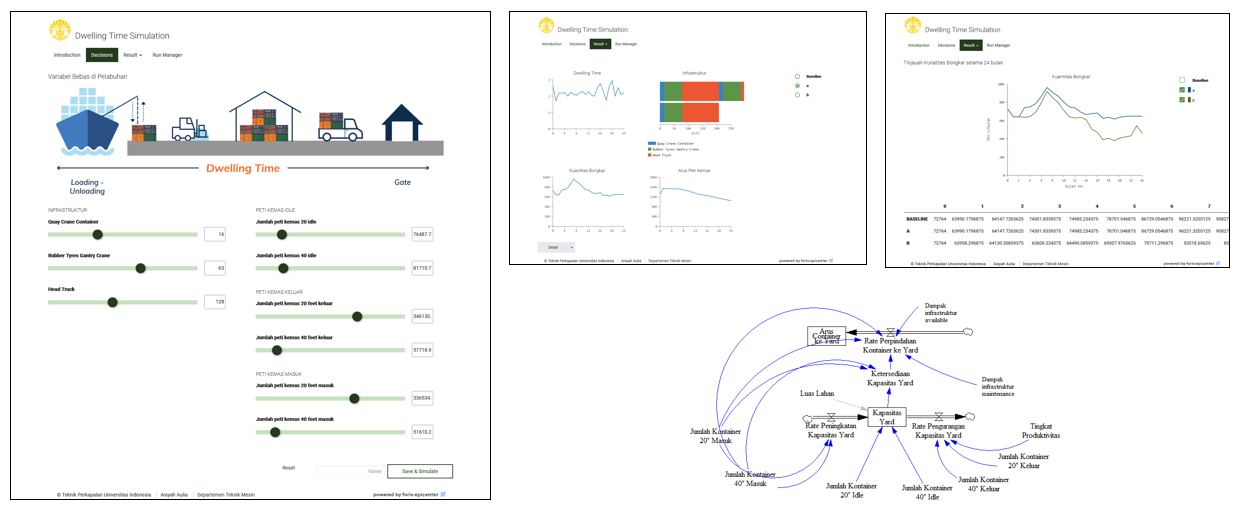
Port performance monitoring using ship Automatic Identification System (AIS) big data, analyzing the ship call sequence from anchoring, pilot boarding, and mooring to berthing, as well as calculating waiting time, approach time, and berthing time. The data analysis includes histograms, whisker plots, and cluster visualizations to support quantitative port performance evaluation.

Decision Support System for Port Dwelling Time

Decision Support System for Port Dwelling Time

A simulation system for analyzing and optimizing container dwelling time at ports.
Decision Support System for Port Dwelling Time

Decision Support System for Port Dwelling Time

A simulation-based decision support system for analyzing and optimizing container port dwelling time, taking into account infrastructure variables such as the number of quay container cranes, rubber-tyred gantry cranes, and head trucks, as well as inbound/outbound container volumes. The system enables interactive simulation of port operational policy scenarios to support managerial decision-making.

Green Ship Recycling and Safety Analysis

Green Ship Recycling and Safety Analysis

A study of safe, environmentally responsible ship recycling and an autonomous surface vehicle innovation.
Green Ship Recycling and Safety Analysis

Green Ship Recycling and Safety Analysis

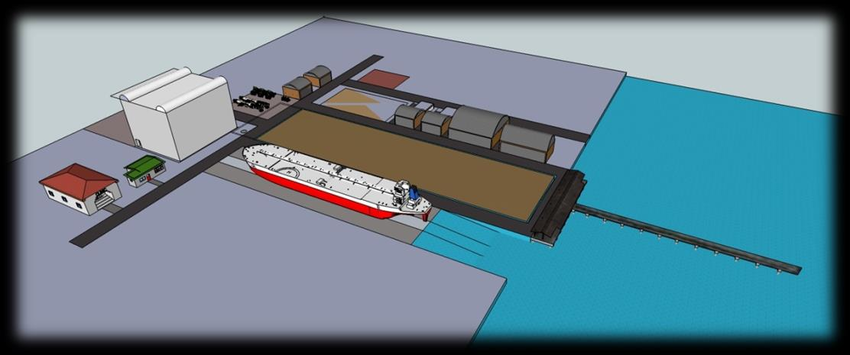
A study on safe and environmentally responsible ship recycling practices, along with safety analysis of water transportation modes. The research has also produced an Autonomous Surface Vehicle (ASV) innovation to support water safety and security activities, including the ability to detect water transportation accident conditions in real time.

Research by Lecturer

Prof. Dr. Ir. Yanuar, M.Eng., M.Sc.

Prof. Dr. Ir. Yanuar, M.Eng., M.Sc.

Reducing Ship Resistance
Prof. Dr. Ir. Yanuar, M.Eng., M.Sc.

Prof. Dr. Ir. Yanuar, M.Eng., M.Sc.

Reducing Ship Resistance

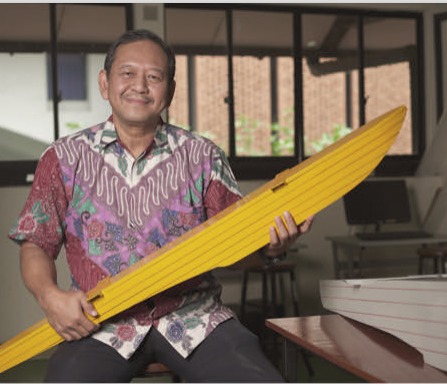
Prof. Yanuar's research focuses on reducing multi-hull vessel resistance (catamarans/trimarans) by leveraging wave interference between hulls to save vessel energy, as well as research on reducing fluid flow resistance in pipes using both active control methods (fluid additives) and passive control methods (pipe geometry and surface roughness variation).

“Indonesia is one of the world's most populous countries with a vast territory. Therefore, it is reasonable for us to continue conducting studies on energy saving.”

Prof. Dr. Ir. Yanuar, M.Eng., M.Sc.
Prof. Dr. Ir. Sunaryo, CEng. MRINA FIMarEST IPU

Prof. Dr. Ir. Sunaryo, CEng. MRINA FIMarEST IPU

Indonesian Shipping Industry Towards International Leadership
Prof. Dr. Ir. Sunaryo, CEng. MRINA FIMarEST IPU

Prof. Dr. Ir. Sunaryo, CEng. MRINA FIMarEST IPU

Indonesian Shipping Industry Towards International Leadership

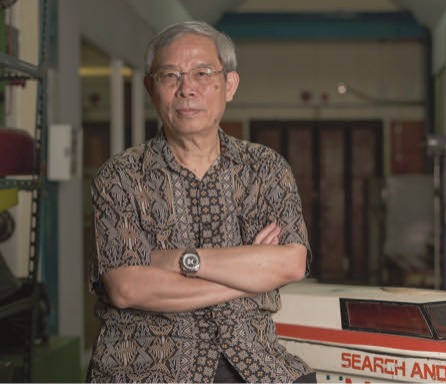
Prof. Sunaryo focuses on ship production industry and shipyard management, ship safety, and the maritime environment, including the application of environmentally friendly ship recycling concepts. His research has also produced an Autonomous Surface Vehicle (ASV) innovation for water security and an underwater ROV capable of detecting objects at depths of up to 100 meters, used together with Basarnas (the National Search and Rescue Agency) to support search and rescue operations. Students under his supervision have also achieved success in international competitions such as the Autonomous Marine Vehicle (AMV), Solar Boat Team (SBT), and UI Hydros.

“Indonesia's shipping industry must be the nation's backbone and be the world's leader in the field of shipping technology. Indonesian waters must be free from accidents and environmental pollution.”

Prof. Dr. Ir. Sunaryo, CEng. MRINA FIMarEST IPU
Dr. Eng. Ir. Muhammad Arif Budiyanto, S.T., M.T., IPM

Dr. Eng. Ir. Muhammad Arif Budiyanto, S.T., M.T., IPM

Developing an Energy-Saving and Environmentally-Safe Port
Dr. Eng. Ir. Muhammad Arif Budiyanto, S.T., M.T., IPM

Dr. Eng. Ir. Muhammad Arif Budiyanto, S.T., M.T., IPM

Developing an Energy-Saving and Environmentally-Safe Port

Dr. Arif's research focuses on the Green Port concept through efficient electrical energy use in container ports, including energy management in reefer storage yards and gantry cranes. One of his innovations, an Automatic Retractable Roof Shade for reefer container yards, has been proven to reduce daily electrical energy consumption by 7-14% by reducing heat exposure to refrigerated containers.

“With the link-and-match program between the industries and academics, technological needs in the industry can be accommodated by way of academic matters, thus proving it as a policy solution to the government.”

Dr. Eng. Muhammad Arif Budiyanto, S.T., M.T.
Dr. Eng. Gunawan, S.T., M.T.

Dr. Eng. Gunawan, S.T., M.T.

Optimizing a Pipe Installation System With Modularization
Dr. Eng. Gunawan, S.T., M.T.

Dr. Eng. Gunawan, S.T., M.T.

Optimizing a Pipe Installation System With Modularization

Dr. Gunawan develops a modularization method for ship engine room piping systems, inspired by modularization principles in the automotive industry, to accelerate ship design and production while reducing costs and the risk of design errors. The research has also produced a computerized system based on genetic algorithms for automatically optimizing component layout and pipe routing.

“When applied to mass production processes, principles of modularization are very powerful since they save time and their results are similar.”

Gunawan, S.T., M.T.
Ir. Achmad Riadi, S.T., M.Eng., Ph.D., IPM

Ir. Achmad Riadi, S.T., M.Eng., Ph.D., IPM

Sea Transportation and Logistics
Ir. Achmad Riadi, S.T., M.Eng., Ph.D., IPM

Ir. Achmad Riadi, S.T., M.Eng., Ph.D., IPM

Sea Transportation and Logistics

Achmad Riadi's research focuses on maritime transportation systems and logistics, covering fleet planning, port service optimization, and system dynamics modeling that links port capacity with fleet performance. He also develops AI-based decision support systems (fuzzy systems and neural networks) to more accurately predict demand for maritime transportation services.

“Sea transportation requires an Information and Communications Technology (ICT)-based decision support system to make it more competitive in achieving the goals of successful transportation and logistics services by employing the 7R principles.”

Achmad Riadi, S.T., M.Eng., Ph.D.
Dr. Eng. Gerry Liston Putra, S.T., M.T.

Dr. Eng. Gerry Liston Putra, S.T., M.T.

Developing the Optimal Ship Structure and Eco-Friendly Fishing Boat
Dr. Eng. Gerry Liston Putra, S.T., M.T.

Dr. Eng. Gerry Liston Putra, S.T., M.T.

Developing the Optimal Ship Structure and Eco-Friendly Fishing Boat

Dr. Gerry focuses on optimizing ship structural design, from scantling to material selection, to reduce production and operational costs while supporting emission reduction programs. He also develops environmentally friendly fishing boat designs using recyclable steel materials, while introducing electric motor propulsion technology to address the shortage of quality wood.

Dr.-Ing. Firman Ady Nugroho, S.T., M.T.

Dr.-Ing. Firman Ady Nugroho, S.T., M.T.

Materials – Corrosion: Enhance Material Durability and Reduce Maintenance Costs
Dr.-Ing. Firman Ady Nugroho, S.T., M.T.

Dr.-Ing. Firman Ady Nugroho, S.T., M.T.

Materials – Corrosion: Enhance Material Durability and Reduce Maintenance Costs

Dr. Firman's research focuses on the phenomenon of surface corrosion and its impact on structural reliability, particularly in the maritime industry where ship steel structures are exposed to moisture and sea salt. His work includes numerical modeling of corroded surfaces and mitigation strategies such as the use of corrosion-resistant materials, protective coatings, and real-time sensor-based monitoring systems for early corrosion detection.

“The occurrence of surface corrosion has a considerable impact on the performance of materials, resulting in a deterioration of surface integrity and a reduction in lifespan. Consequently, this affects the durability and reliability of industrial applications.”

Dr.-Ing. Firman A. Nugroho, S.T., M.T.
Kurniawan Teguh Waskito, S.T., M.T., Ph.D.

Kurniawan Teguh Waskito, S.T., M.T., Ph.D.

Centre for Maritime Development (MARDEV): Ocean Sustainable Development Systems
Kurniawan Teguh Waskito, S.T., M.T., Ph.D.

Kurniawan Teguh Waskito, S.T., M.T., Ph.D.

Centre for Maritime Development (MARDEV): Ocean Sustainable Development Systems

Kurniawan Teguh Waskito develops a cost-effective ocean wave energy converter with a hydraulic power take-off system, integrating wave, solar, and wind energy through the ON-POWER (Ocean POWER) research program to provide clean energy, fresh water, green hydrogen, and local electricity for coastal areas. He also develops the ON-SHIP (Ocean-going Ship High Performance) program to evaluate ship performance in actual sea conditions through weather and wave simulations to support shipping operational efficiency.

“We nurture people and technology by ways of preparing human resources with sustainable green technologies to preserve the planet and society.”

Kurniawan Teguh Waskito, Ph.D.
Dr. Eng. Dimas Angga Fakhri Muzhoffar, S.T., B.Eng., M.Eng.

Dr. Eng. Dimas Angga Fakhri Muzhoffar, S.T., B.Eng., M.Eng.

Fleet Management Systems, Ship Allocation Optimization, and Distribution Scheme Analysis
Dr. Eng. Dimas Angga Fakhri Muzhoffar, S.T., B.Eng., M.Eng.

Dr. Eng. Dimas Angga Fakhri Muzhoffar, S.T., B.Eng., M.Eng.

Fleet Management Systems, Ship Allocation Optimization, and Distribution Scheme Analysis

Dr. Dimas develops big data- and AI-based fleet management systems for operational optimization, cost reduction, and improved shipping safety, including the use of evolutionary algorithms to optimize ship allocation to routes and tasks in order to maximize operational efficiency. He also conducts comparative analyses of cargo distribution schemes (Milk-Run, Hub-Spoke, Direct Shipping, Cross-Docking, and Pool Distribution) to identify the supply chain model best suited to specific cargo and distribution needs.

Dr. Agus Sunjarianto Pamitran, S.T., M.Eng.

Dr. Agus Sunjarianto Pamitran, S.T., M.Eng.

Ice Slurry Generator: A Cooling System Using Ice Slurry Media
Dr. Agus Sunjarianto Pamitran, S.T., M.Eng.

Dr. Agus Sunjarianto Pamitran, S.T., M.Eng.

Ice Slurry Generator: A Cooling System Using Ice Slurry Media

Dr. Agus S. Pamitran has developed an ice-slurry-based cooling innovation that is highly beneficial for Indonesia's traditional fishermen, who have long relied on ice blocks brought from land to preserve their catch. This seawater-based ice slurry maker reduces fishermen's dependence on ice blocks and makes it easier to produce ice directly at sea, extending the duration of fishing trips. The temperature of the resulting ice slurry can be tuned based on the seawater's salinity, allowing the cooling medium to be adjusted to keep fish fresh according to consumer preference. Besides cooling fish, ice slurry can also serve as a secondary coolant in refrigeration systems, for example to reduce the initial investment cost of cold-storage buildings.